Two Prohibitions
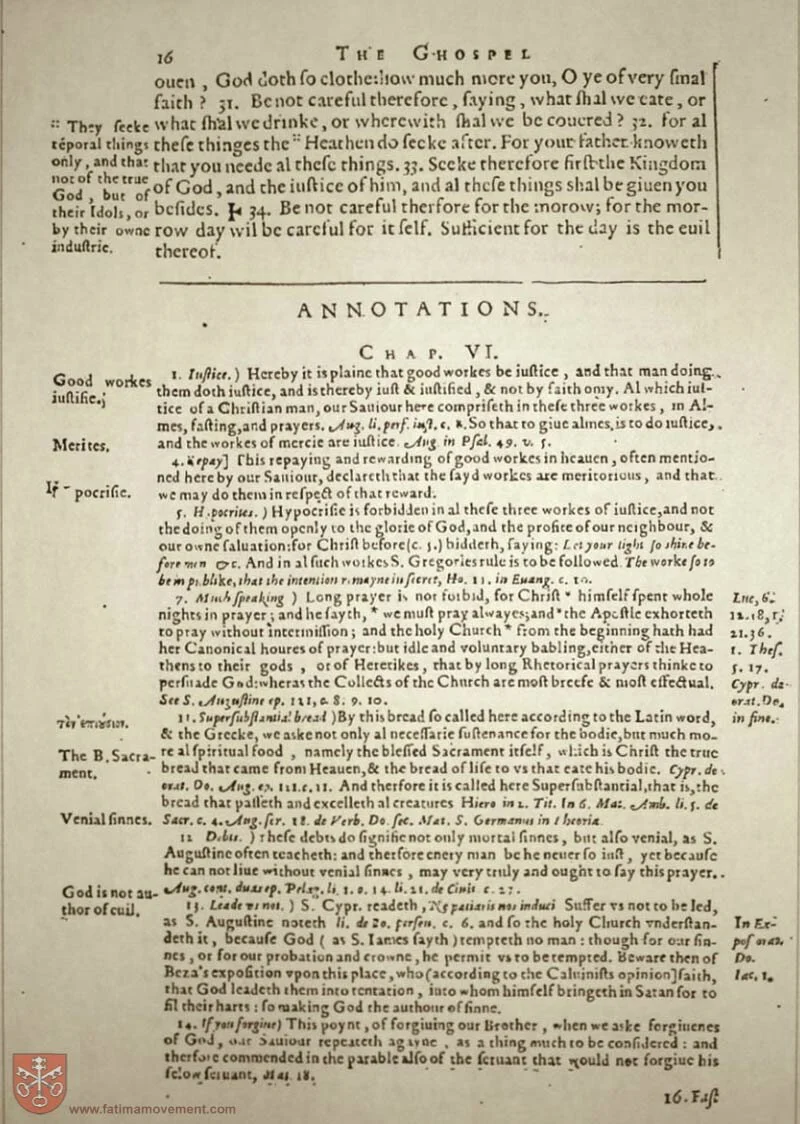
The Douay-Rheims Bible entered English life under two simultaneous prohibitions. The first came from the Protestant English state, which made possession of Catholic books a criminal offence. The second came from the Catholic Church itself, which required readers to obtain a license from a confessor before reading the Bible privately. Both prohibitions had their own logic, and understanding them requires knowing something about the English Reformation world in which the translation was produced.
A second restriction applied simultaneously, distinct in character and origin. Even among Catholics, even in France where the book was printed, no Catholic was permitted to read the Rheims New Testament without first obtaining a license from the proper ecclesiastical authorities. The licensing requirement reflected a settled position of the Church on how Scripture should be received and read.
Scripture and the Church's Teaching Authority
The Catholic Church has consistently taught that divine revelation is transmitted through two channels: Sacred Scripture and Sacred Tradition, with the Church's Magisterium as the authoritative interpreter of both. On this understanding, reading Scripture in isolation from the Church's living tradition is a spiritually incomplete act. The biblical text requires the Church's teaching to be properly understood; separated from that tradition, it is open to misreading in ways that matter profoundly.
The history of the Reformation gave this concern practical urgency. Within a generation of Luther's insistence on Scripture alone as the rule of faith, Protestantism had fractured into competing denominations, each reading the same text and reaching incompatible conclusions on matters of faith and practice. For Catholic authorities, this spectacle confirmed what their theology had already taught: that the biblical text does not interpret itself, and that distributing it without adequate preparation and guidance carried real spiritual risks for ordinary faithful.
The licensing requirement for Catholic readers of the Rheims New Testament was the institutional expression of this conviction. Those seeking access were to satisfy their bishop or pastor that they had sufficient formation to receive Scripture profitably.
A Doctrine Long Established
Cotton, surveying the history of Catholic restrictions on lay Bible reading, traced their formal expression in canon law to the fourteenth canon of the Council of Toulouse, held in 1229. This canon prohibited the laity from possessing either the Old Testament or the New. Only a Psalter, a Breviary, or the Hours of the Virgin Mary were permitted, and even these were strictly forbidden to be had in the vernacular tongue.
The Council had been convened to address the Cathar heresy in the south of France. The spread of Catharism had been enabled in part by the distribution of Scripture outside ecclesiastical supervision, used to support doctrinal positions incompatible with Christian orthodoxy. The canon responded to that specific crisis, and the principle it expressed was applied more widely over the following centuries.
Cotton documented the chain of subsequent confirmations:
- Council of Trent, 1564
- Pope Clement VIII, 1596
- Pope Benedict XIV, 1757
- Pope Pius VII, 1816
- Pope Leo XII, 1824
- Pope Gregory XVI, 1844
Throughout the entire period in which the Douay-Rheims Bible was being translated, published, revised, and read, the restriction on unguided vernacular Bible reading remained a consistently affirmed element of Catholic discipline. Cotton's conclusion was straightforward: the principle "that Vernacular Translations of the Bible are not necessary for the Laity, and ought not to be conceded to them without the express permission of a bishop or priest, has long been a recognized dogma of that Church."
The Translators' Own Position
The Rheims translators stated their position plainly: they had produced a vernacular Scripture
from pastoral necessity rather than from any belief that the laity had an inherent right to it.
As Cotton put it, they judged it advisable not from choice, but from necessity
to put
forth a version of their own. The growing circulation of Protestant English Bibles among
Catholics had forced a response. Unless the Church furnished its own English translation, its
members would be reading Protestant versions shaped by Protestant theological assumptions. The
Rheims New Testament, published in a time of crisis, was produced as a pastoral
corrective, accompanied by the annotations that supplied the doctrinal guidance its authors
considered inseparable from any proper reading of the text.
The result was an English New Testament that Catholic readers could access under licence, subject to the judgment of their bishop or pastor that they had sufficient learning and sound dispositions to receive it well.
The Living Voice of the Church
Dr. John Milner, Vicar Apostolic of the Midland District, writing around 1819, gave clear expression to the principle behind the licensing requirement. Where a more latitude-minded fellow bishop had directed Challoner's more pointed annotations to be omitted from a new edition, Milner objected that those notes were "precisely the part which is wanted at the present day to render an English translation of the Sacred Text safe and profitable in the hands of the British laity." Scripture, in Milner's understanding, could not be responsibly circulated without the theological guidance necessary to read it correctly.
He explained the underlying principle in his Supplementary Memoirs of English Catholics: "substituting the dead letter of the Text for the living voice of the Church was the ready means of undermining the Catholic Faith." This formulation is a precise statement of the Catholic understanding of the relationship between Scripture and the Church: that Scripture is the word of God, but the Church is its living interpreter, and the one cannot function rightly without the other.
Cardinal Wiseman's Statement
Cardinal Wiseman, writing in 1853, addressed the question directly. Asked why the Catholic
Church did not give the Bible indiscriminately to all, he acknowledged forthrightly the real
difference between Catholic and Protestant approaches. He would not deny that the two positions
were antagonistic: They are antagonistic: and we glory in avowing it.
Faith came from hearing,
he argued, not from reading; the Church's authority was exercised through the living voice of her
teachers, not through paper and ink distributed without guidance.
Wiseman's statement is sometimes cited as evidence of Catholic hostility to the Bible. It is more accurately read as a clear expression of the Catholic theology of revelation: that the Church, as the divinely appointed custodian and interpreter of Scripture, transmits revealed truth through her living teaching in a way that individual reading alone cannot replicate.
The Text and Its Context
The Douay-Rheims Bible was produced in this environment. For the context of the translation's creation, see Born in Exile: The Origins of the Douay-Rheims Bible. Its translators worked in exile, risking death to bring Scripture to English Catholics in England. Their purpose was to furnish their community not simply with a text but with the word of God in its proper Catholic form, accompanied by the annotations and guidance that would enable it to be received correctly. The licensing requirement that governed its use was part of the same pastoral provision.
The book presented on this site is Gregory Martin's original first edition translation: printed in 1582 for readers who needed a licence to open it, smuggled across the Channel for Catholics who could be imprisoned for possessing it, and refuted by Protestants who in doing so spread it further than its authors had managed. It stands as a document of one of the most contested moments in the history of Scripture in the English language, produced by scholars whose commitment to Scripture and to the Church's teaching authority they understood as inseparable.
The Price of Possession
The danger was concrete and documented. The Elizabethan settlement had imposed legal penalties on Catholics through a succession of Acts: the Act of Uniformity (1559) set a fine of twelve pence for each absence from Anglican Sunday services; the Act against Bulls from Rome (1571) raised the stakes further; and the Act of 1581, passed in the same year that Saint Edmund Campion was arrested and executed, converted recusancy from a civil into a criminal matter, escalated the fine to £20 per lunar month, and added felony charges for those who harboured priests.
Catholic books occupied a specific place in this legal framework. They could be seized at ports, confiscated from booksellers, and destroyed. Possession in large quantities could result in prosecution for distributing seditious literature. The result was systematic destruction: copies of the 1582 Rheims New Testament were seized on arrival in England, which is why first editions are now exceptionally rare. The Catholic Encyclopedia (1913) and Henry Cotton's 1855 bibliography both note that several early printings have never been definitively accounted for and may have been entirely destroyed.
Those who nonetheless possessed and circulated the Douay-Rheims were taking a legal risk that went well beyond a fine. The atmosphere in which the Bible was distributed was one in which the men who had translated it had already been executed, imprisoned, or driven permanently into exile. The translation was not merely a religious text; in Elizabethan England, it was evidence of allegiance to a faith that the state had declared treasonous.
The End of the Restriction
The civil penalties that made Catholic Bible possession a criminal matter in England ended with the Catholic Emancipation Act of 1829, which removed the principal legal disabilities on Catholics and effectively decriminalized Catholic worship and Catholic books. The seizure of Douay-Rheims copies at English ports, and the prosecutions for possessing Catholic literature, belonged to an era that the Act formally closed.
The Church's own licensing requirement for vernacular Scripture had a separate history. Pope Leo XIII's 1897 constitution Officiorum ac Munerum revised the rules of the Index of Forbidden Books and permitted Catholics to read approved vernacular translations without the individual bishop's license that had been required since Trent. What had been a matter of personal permission granted by a pastor became a general grant, provided the translation bore ecclesiastical approval. The practical restriction on private Catholic Bible reading was not abolished but substantially loosened. The Index of Forbidden Books itself was abolished in 1966 under Paul VI, ending the formal censorship apparatus that had governed Catholic Bible circulation for four centuries.
Sources
- Rev. Henry Cotton, Rhemes and Doway: An Attempt to Shew What Has Been Done by Roman Catholics for the Diffusion of the Holy Scriptures in English (Oxford University Press, 1855), primary source for the Council of Toulouse, the papal confirmation chain, Dr. Milner, and Cardinal Wiseman
- Paris Marion Simms, The Bible in America: Versions that have Played Their Part, source for the licensing requirement on Catholic readers of the Rheims NT
← A Bible of Arguments: The Annotations · How the Douay-Rheims Shaped the King James Bible →